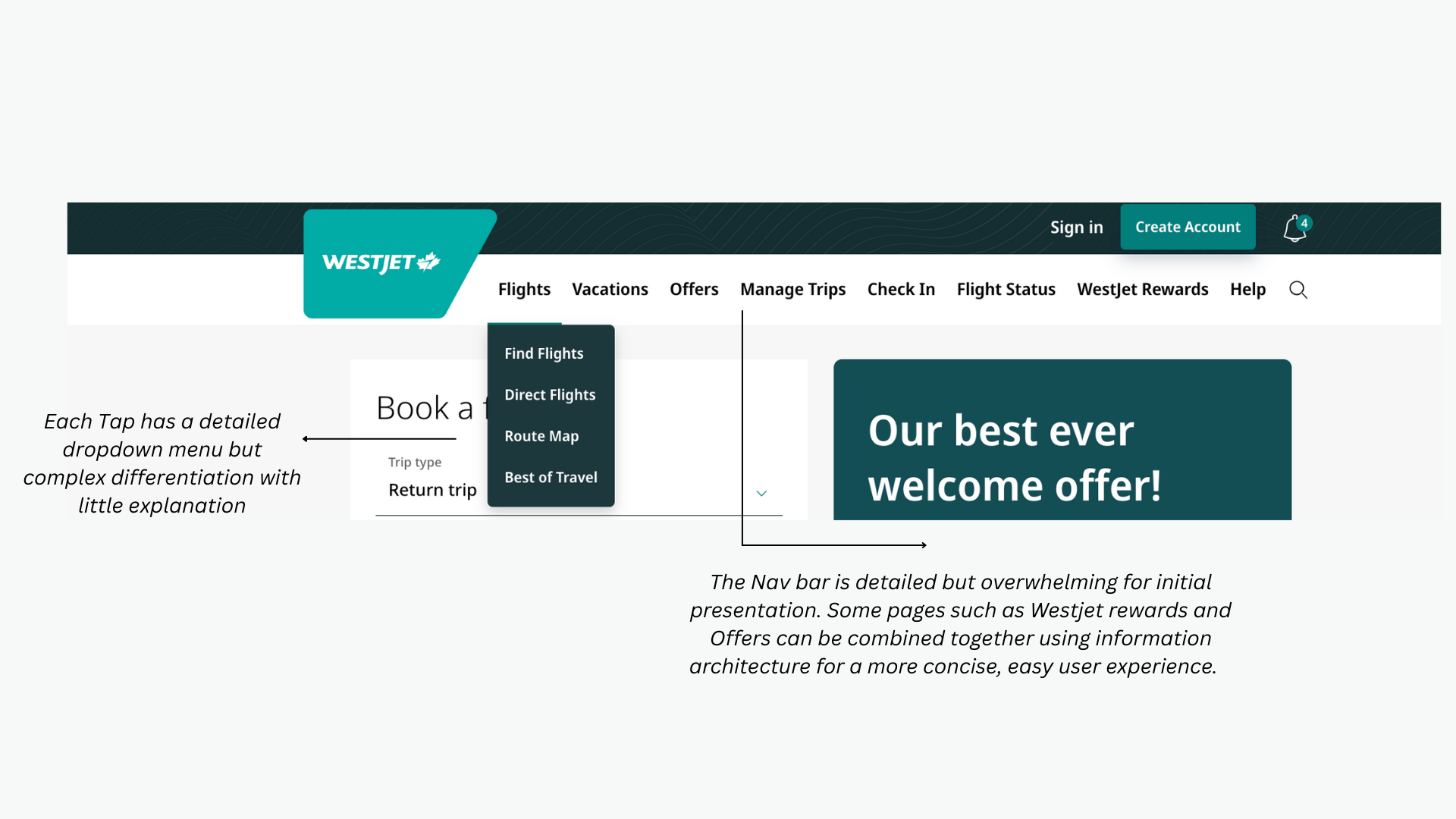
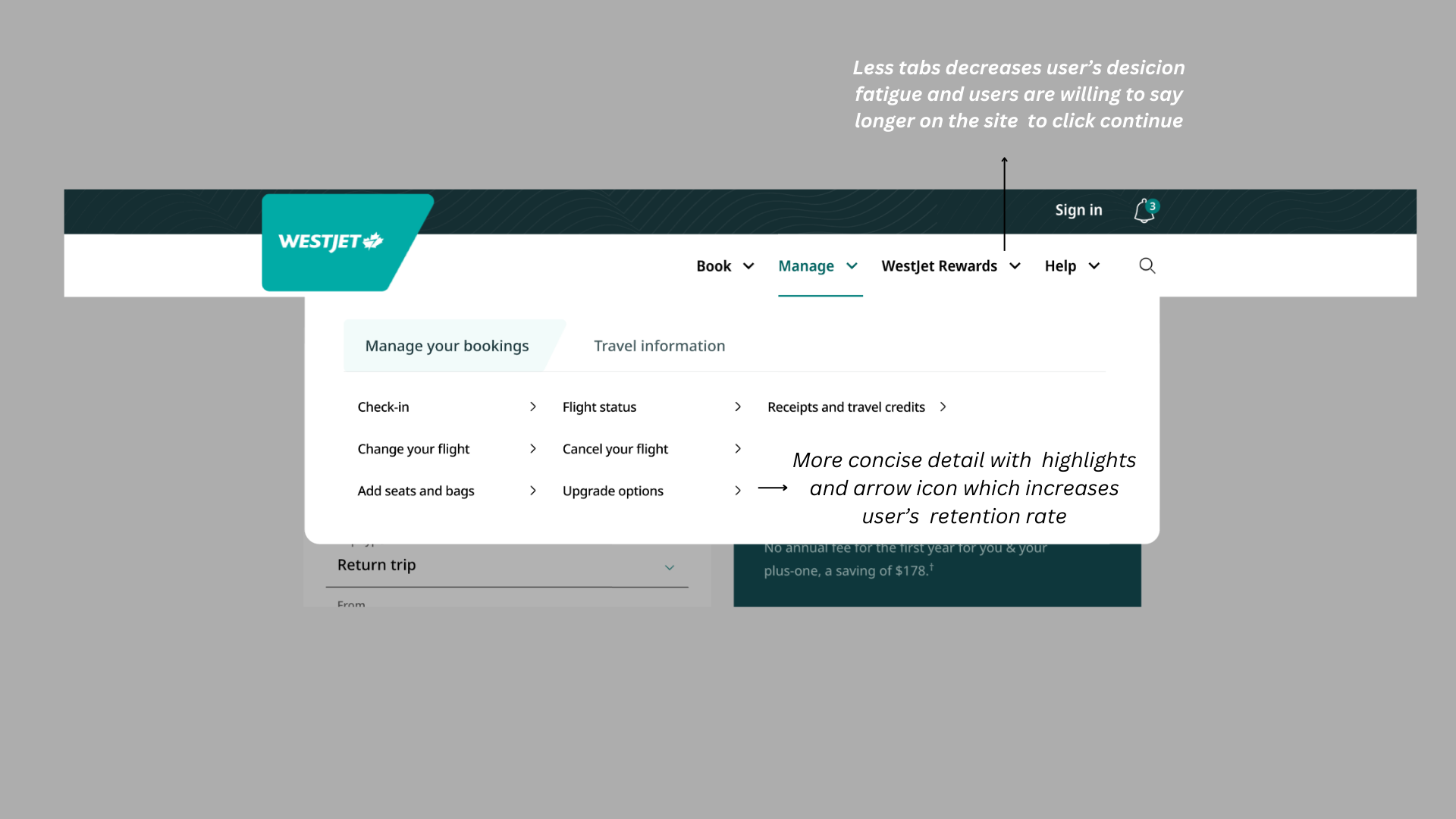
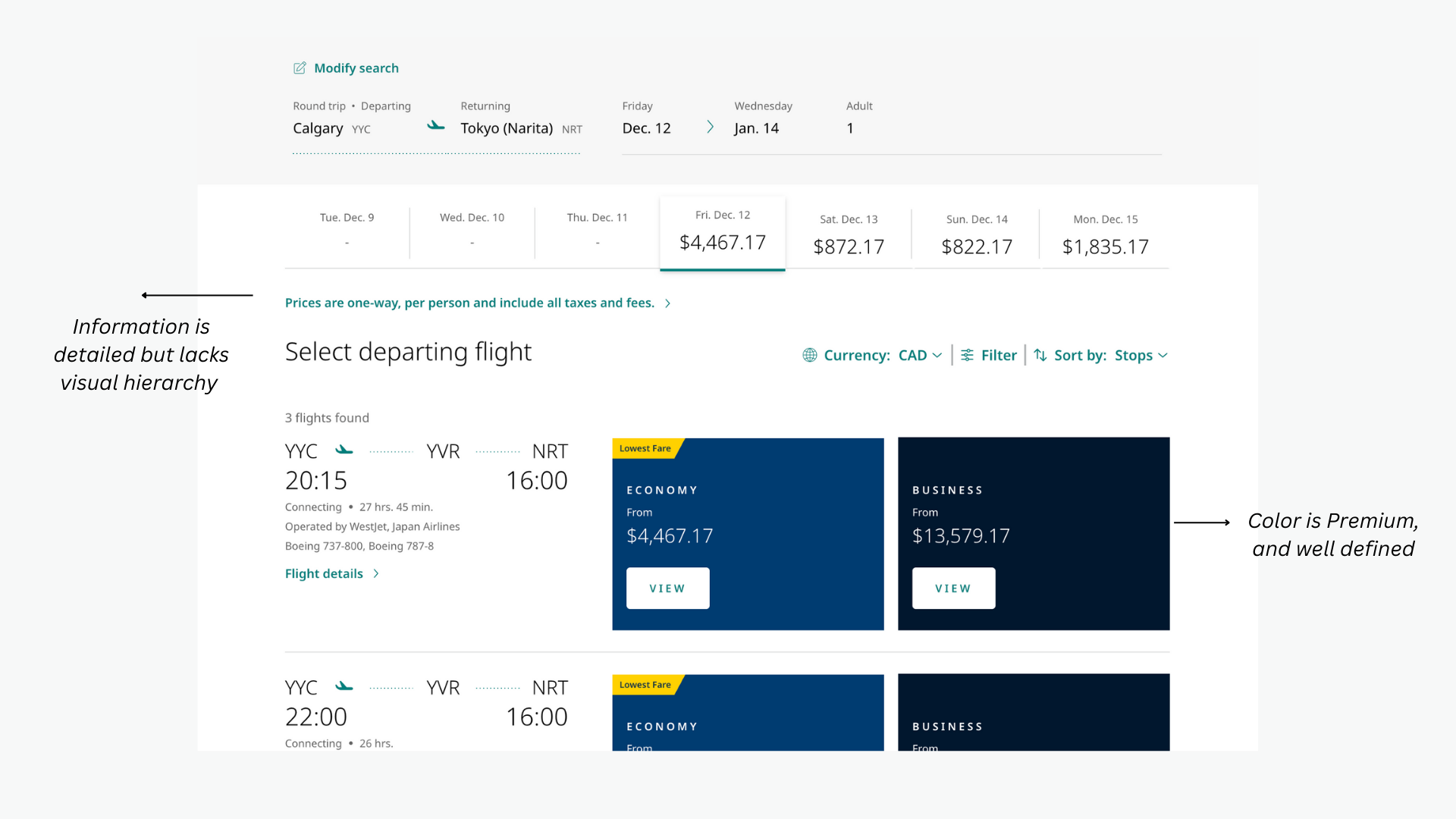
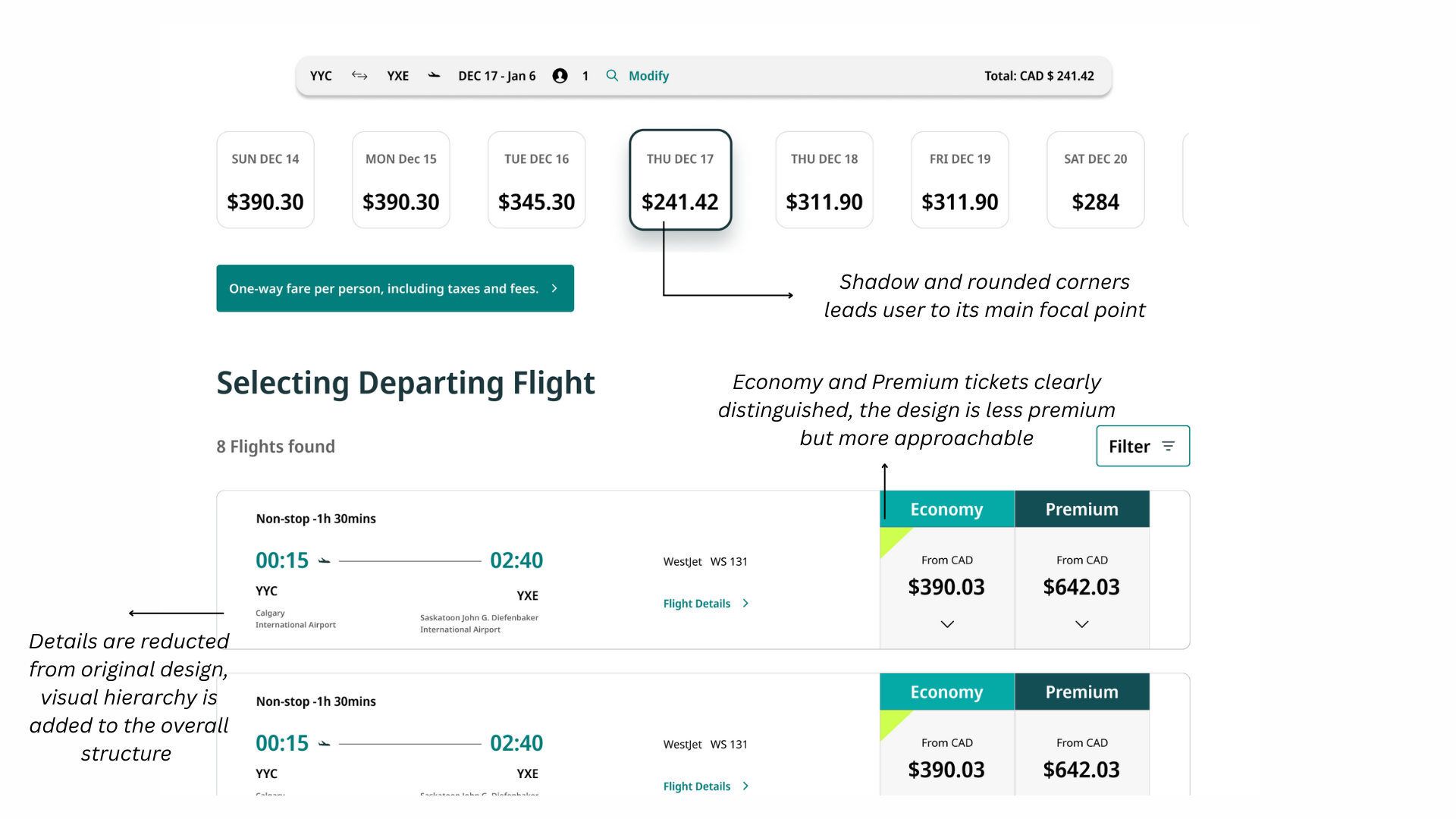
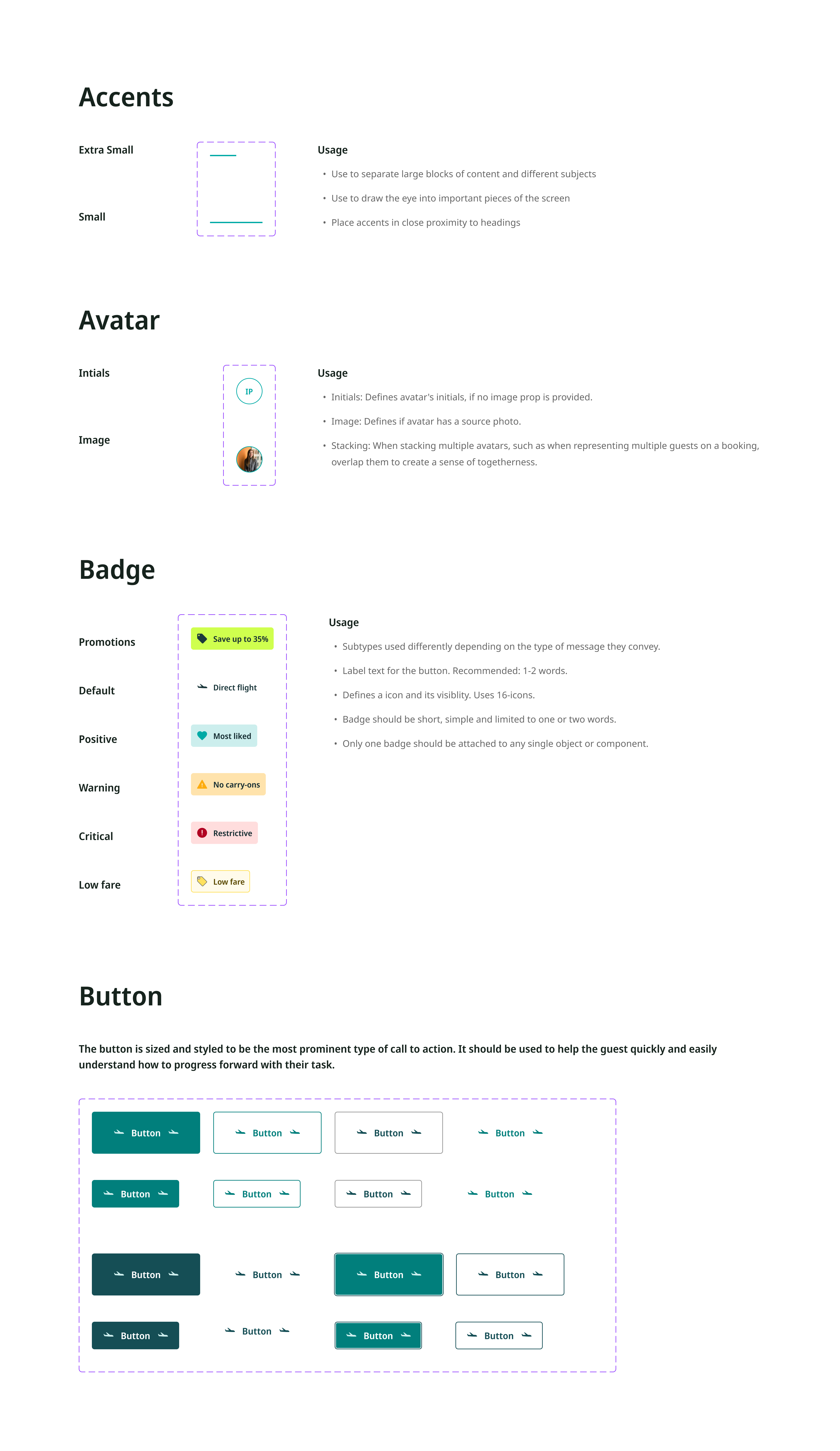
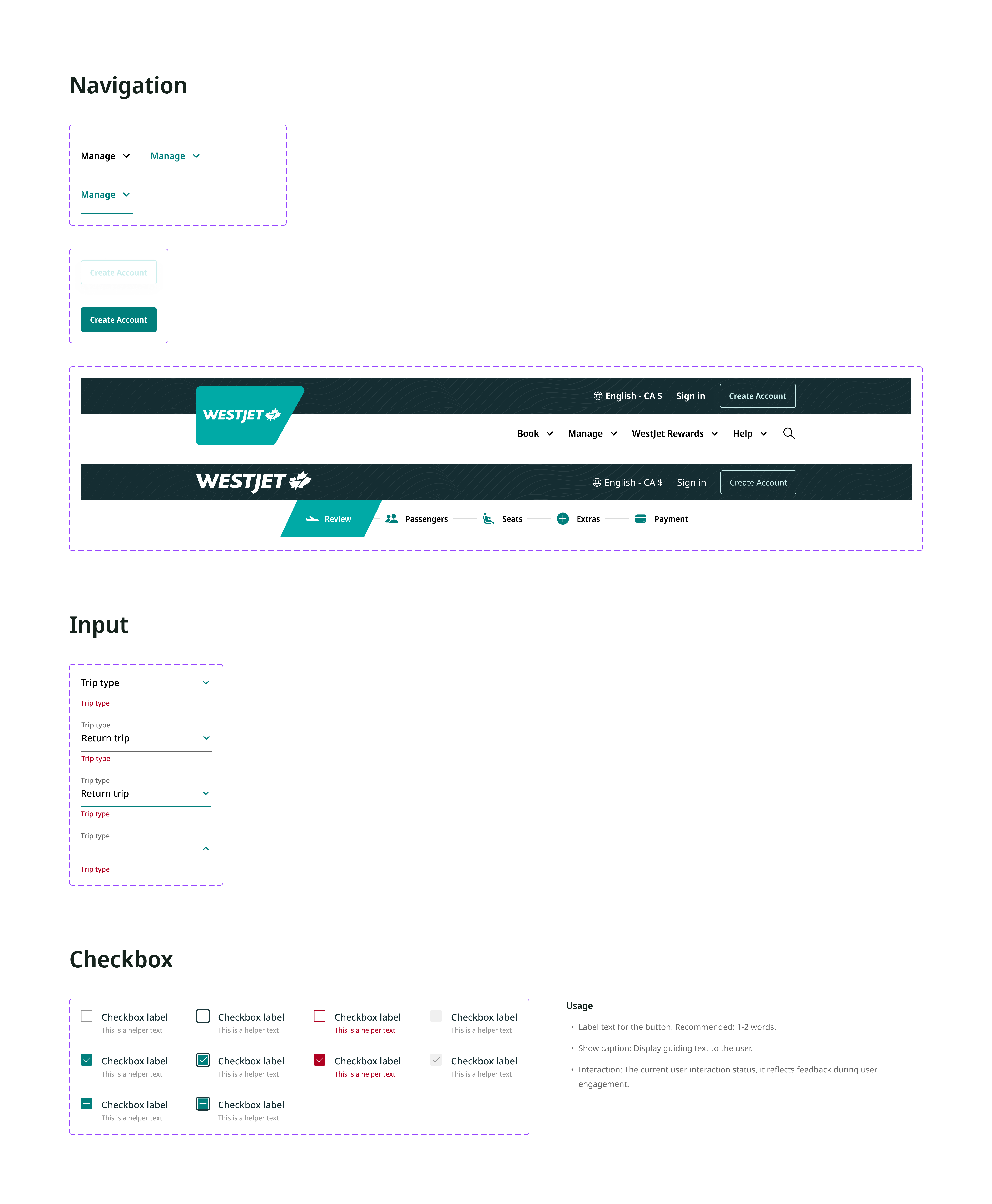
WestJet’s booking system prioritizes comprehensive information, but this creates friction for users booking spontaneous or budget-focused trips. This project addresses those concerns by adjusting WestJet's desktop user experiences through simplified information architecture, streamlined user flow, and reusable design systems. In result, usability testing showed a potential 10% increase in user retention.
6 min read
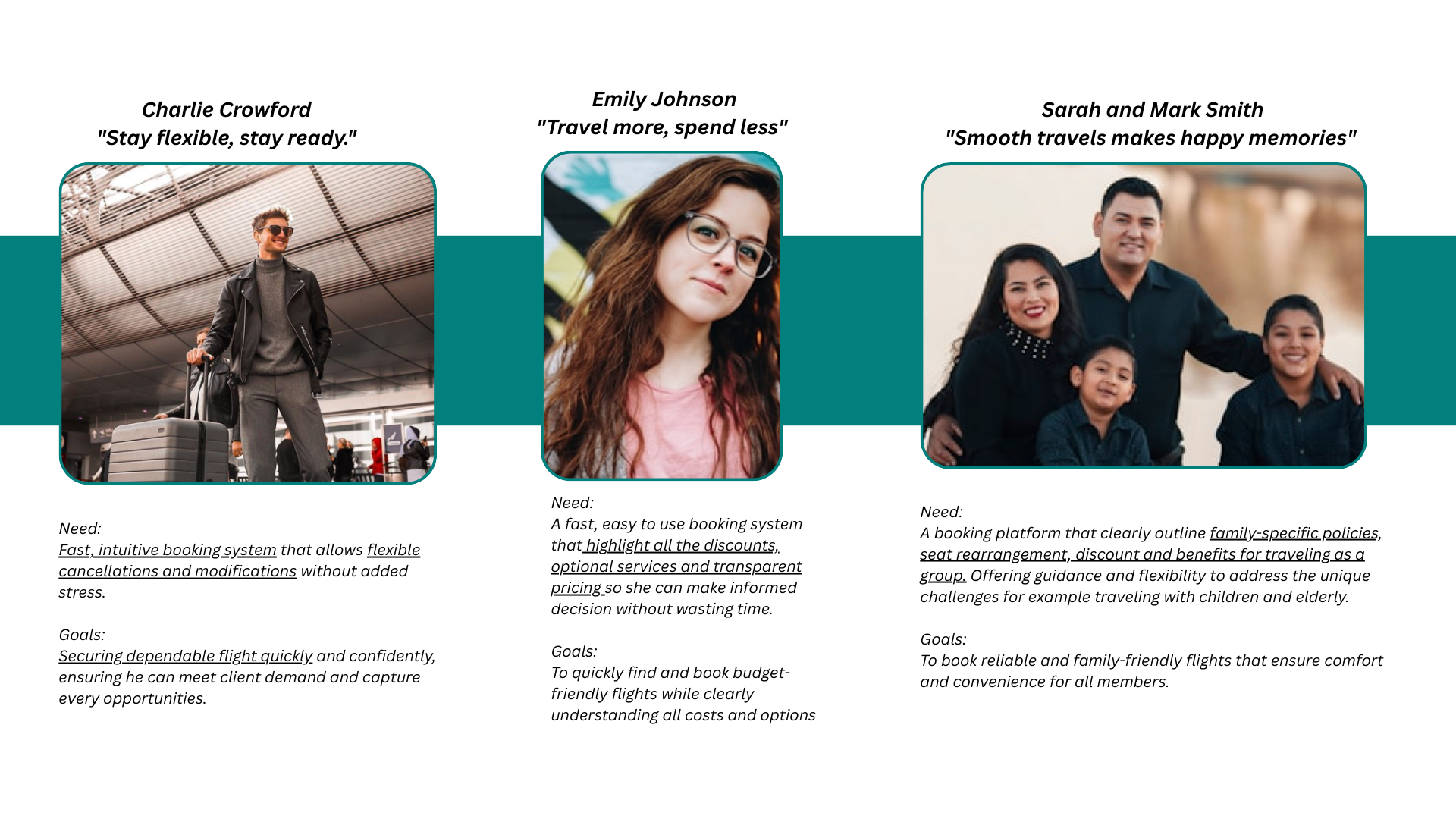
Travelers booking through WestJet often face a detailed yet overwhelming booking process, which is especially frustrating for last-minute and budget-focused users who need speed and clarity. The problem lies in between balancing necessary information with efficiency.
Our goal is to refine a more intuitive booking experience that allows users to book flights quickly, confidently, and with less effort.
1: I've learned a lot both individually and collaboratively throughout this project, gaining a strong appreciation for team dedication and attention to detail.
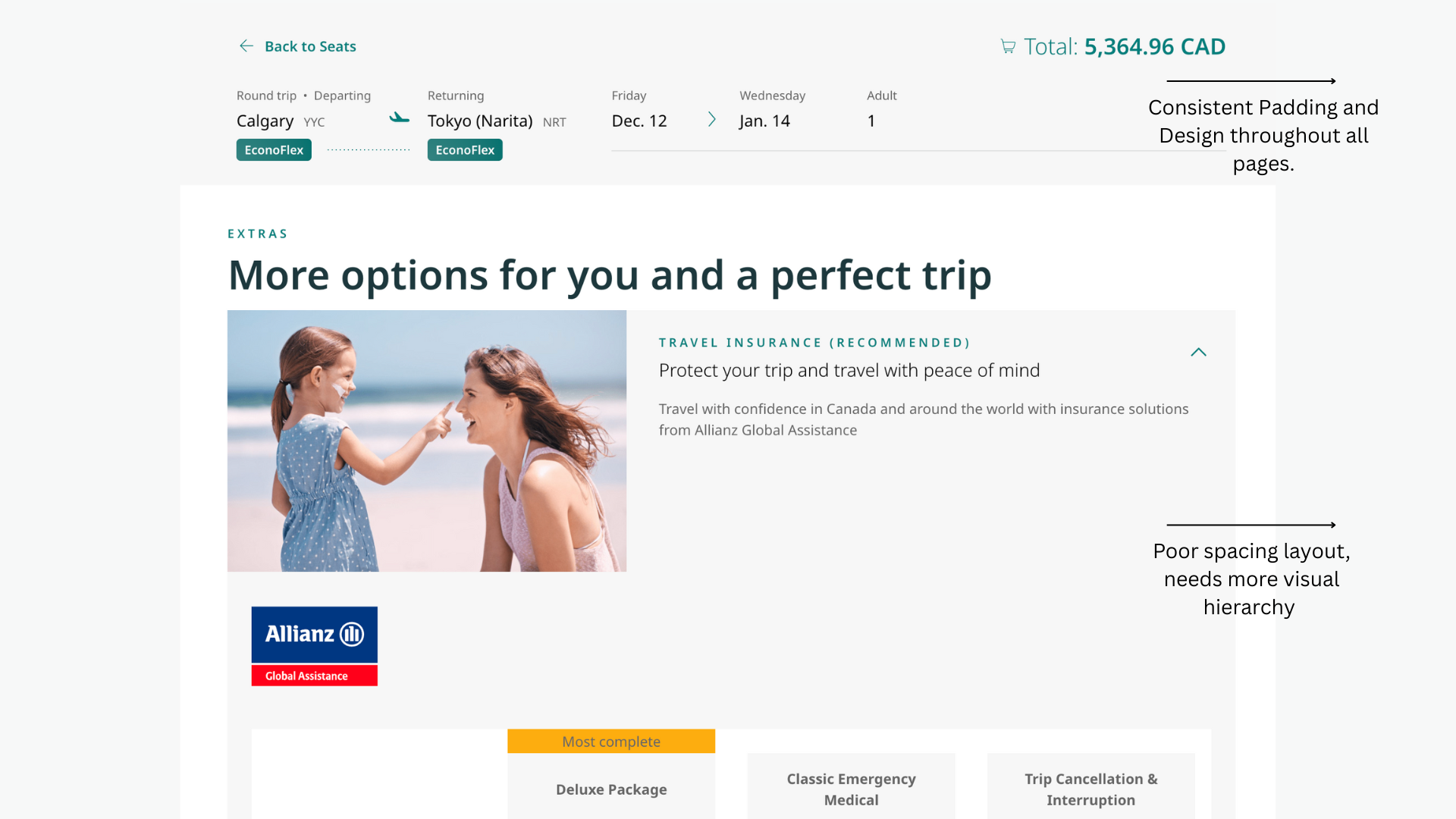
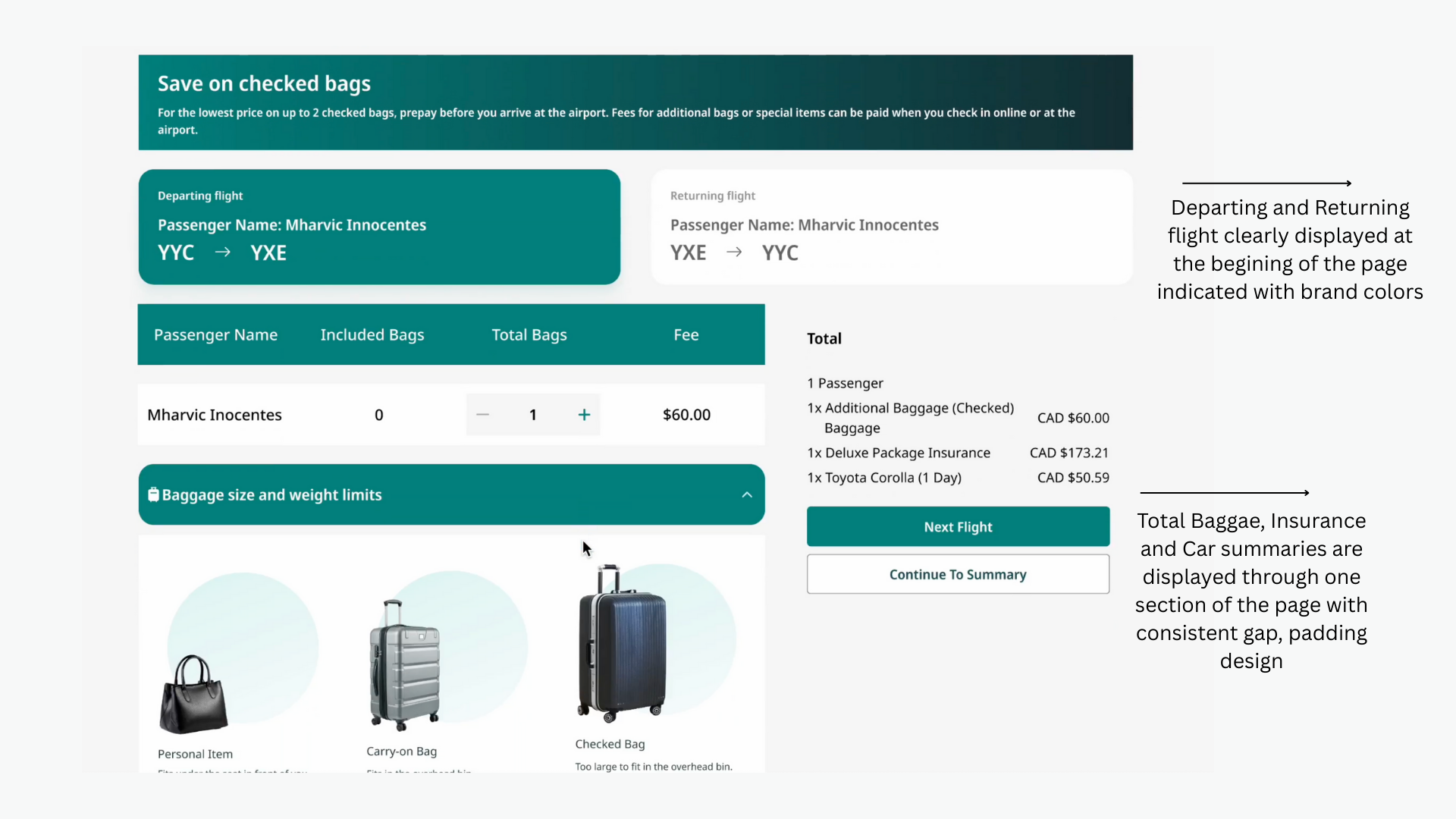
2. I learned how to maintained consistent spacing, padding, and layout across all screens, improving overall visual cohesion. Since every member had their own style and way of execution, we all learned to follow a certain guideline, and maintain the same style of design.
3. I've learned how to collaborate time efficiently within a driven team to align on design standards and execution. Sometimes adjusting details last minute and other times waiting for design updates.
1. For future references, we would continue to build on this foundation from the design systems to further strengthen design quality and efficiencies.